



For decades, the food pyramid loomed over nutrition advice, enthusiastically directing millions of people toward a carb-heavy lifestyle. We were told to base our meals around grains. Bread, cereal, rice, and pasta formed the foundation. Protein and fats were ushered into the background. But lately, something interesting has happened. The pyramid has… flipped.
Not literally, of course. But conceptually, we are witnessing a shift toward what many are calling an “inverted food pyramid,” where protein, healthy fats, and whole foods take center stage, and refined carbohydrates are finally being asked to take a step back. So the question is: Is this a step in the right direction?
Short answer: yes. Long answer: also yes, but with some nuance, because nutrition, like humans, refuses to be simple.
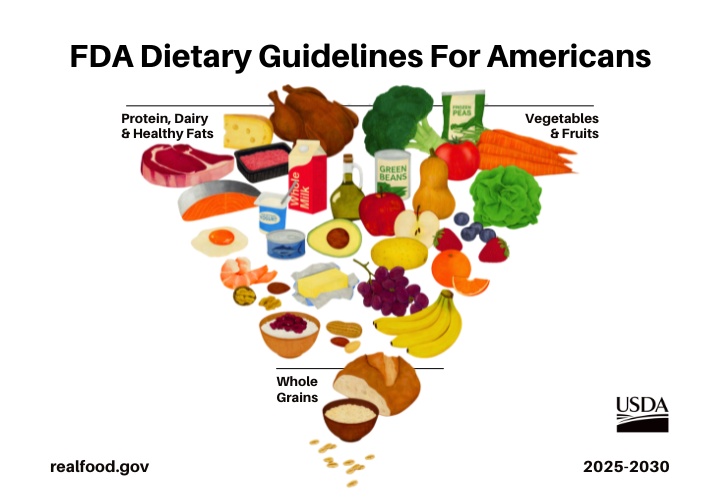
The modern evolution of dietary guidelines reflects something refreshing: a willingness to admit that we may have gotten a few things… not entirely right the first time. Let’s break down the major shifts.
Protein has recently stepped into a starring role, and for good reason.
We now understand that adequate protein intake is essential for:
This is particularly important in a world where many people are unknowingly under-muscled, even if their weight appears “normal.” The old pyramid didn’t account for this. The new approach does.
And frankly, your metabolism is grateful.
There was a time when fat was treated like the nutritional equivalent of a supervillain. If a food contained fat, it was automatically “bad”. Now we know better. Healthy fats—like those found in avocados, olives, coconuts and fatty fish—are essential for:
The new model doesn’t just tolerate fat. It embraces it, selectively. Because while trans fats still deserve their bad reputation, natural fats are not the enemy. In fact, they are often part of the solution. Check out my previous blog on how eating fat can help you burn fat to learn more.
This might be the most noticeable shift. Refined carbohydrates—think white or “whole grain” bread, cereals, rice, and pasta… not to mention processed snacks—have been gently but firmly escorted out of the dietary spotlight.
Why?
Because excessive intake of refined carbs is linked to:
Instead, the emphasis has shifted toward whole, unprocessed carbohydrate sources, such as:
Carbs aren’t gone. They’ve just been asked to clean up their act a bit.
If the original pyramid was built on grains, the inverted version is built on food that actually looks like food.
This includes:
The underlying philosophy is simple: the closer a food is to its natural state, the better your body tends to handle it. For example: your body recognizes a blueberry. It does not recognize “blue raspberry flavor.” (What the heck is a blue raspberry anyway???)
One of the quiet revolutions behind this shift is a growing awareness of blood sugar regulation. Instead of thinking only in terms of calories, we now consider how foods affect:
Meals that combine protein, fat, and fiber tend to produce more stable energy and fewer cravings. This is a MAJOR departure from the high-carb, low-fat guidance of the past, which often left people on a rollercoaster of energy highs and crashes.
At its core, the inverted food pyramid reflects something we’ve long believed at MyHealth1st: the body thrives when we find the proper balance.
A holistic approach to nutrition isn’t about rigid rules or one-size-fits-all plans. It’s about understanding how different systems in the body interact, figuring out what’s optimal based on our unique physiology, and supporting that in a way that promotes long-term health.
This new model aligns beautifully with that philosophy in several ways.
Not all calories behave the same way in the body. A 300-calorie pastry and a 300-calorie meal of protein, vegetables, and healthy fats are not metabolically equivalent. The inverted pyramid acknowledges this by focusing on nutrient density and metabolic impact, rather than just numbers.
Hormones are the body’s internal communication system, and they are heavily influenced by nutrition. Adequate protein and fat intake helps support:
The old low-fat, high-carb approach often disrupted this balance. The new approach helps restore it.
Let’s be honest: no one wants to live on a diet that feels like a punishment. Meals built around protein, healthy fats, and whole foods tend to be:
And sustainability is where real progress happens.
When you eat in a way that stabilizes blood sugar and supports satiety, something magical happens: You stop thinking about food all the time. Yes… I’m serious. Hunger cues become much clearer. Cravings diminish. Energy levels even out. It’s almost as if your body says, “Ah, yes. This is what I’ve been asking for.”

Now, before we crown the inverted pyramid as the ultimate solution for everyone everywhere, let’s add an important layer: There is no single perfect diet for every human being. Even the best general framework needs to be personalized.
One area where personalization comes into play is eating for your blood type. At MyHealth1st, we’ve found this way of eating to be a profound therapeutic tool. Many individuals report noticeable differences in:
For example:
Blood type isn’t the only factor here, but it can be one piece of the personalization puzzle.
Beyond blood type, your ideal macronutrient breakdown depends on factors like:
Two people can follow the same general “inverted pyramid” approach and still require very different:
This is where many people get stuck. They adopt a healthier framework but don’t see the results they expect, simply because the details aren’t tailored to them.
Our bodies are constantly giving us feedback. The question is whether or not we’re listening. Signs your nutrition is working for you:
Signs it might need adjustment:
Personalization is about reading these signals and making informed adjustments, rather than blindly following a template.
I’d say absolutely. It corrects several major missteps of past dietary guidelines and moves us closer to a way of eating that supports:
But it’s not the final destination. Think of it more like a well-designed map. It gets you pointed in the right direction, but you still need to choose the exact route that fits your journey.
Understanding these concepts is one thing. Applying them to your own life is another. That’s where guidance can make all the difference. MyHealth1st offers a health coaching program designed to take the guesswork out of nutrition and lifestyle changes. Whether your goal is:
…we can help you identify your personalized targets and create a plan that works for your body and your lifestyle.
We offer a Lifestyle Health Coaching Program designed for people who want targeted help with weight loss, body-composition optimization, healthy habit integration. Here’s what it includes:
If you’re interested in personalized support, whether you are on a GLP-1 or not, contact us today, and we’ll get you scheduled with one of our health coaches for a Kickstart.
All in all, the inverted food pyramid represents progress. It reflects a growing understanding that nutrition isn’t just about avoiding disease, but about optimizing how we feel, function, and live. It gives us a better foundation. A smarter starting point. But the real magic happens when that foundation is shaped to fit YOU. Because at the end of the day, the best diet isn’t the one that looks perfect on paper. It’s the one that works in real life!
I’m Erin, and I’m a National Board Certified and Functional Medicine Certified Health Coach. If you’re seeking some humor, support and encouragement in your corner as you work toward your weight loss goals, consider signing up for MyHealth1st’s weight loss program or some health coaching sessions. I’m excited to meet you and work with you to make your goals a reality.

Erin is a National Board Certified and Functional Medicine Certified Health Coach with a passion for fitness, holistic wellness, and ethical food production.