



Over the past few years, peptides known as GLP-1 receptor agonists have completely reshaped the weight loss landscape.
Once primarily used for diabetes management, these medications have rapidly become some of the most widely prescribed weight loss tools in modern medicine. Their rise has been nothing short of meteoric. Social media discussions have exploded. Celebrities quietly (or not so quietly) admitted to using them. Primary care clinics, telehealth platforms, and specialized practices began offering them to patients struggling with weight.

For many people, the results were dramatic.
Appetite dropped, and cravings softened. The constant mental chatter about food—what many people describe as “food noise”—suddenly went quiet.
For people who had spent years feeling like they were in a constant battle with hunger, the relief was profound.
And to be clear: GLP-1s can be an incredibly helpful tool.
But tools are only as effective as the way they’re used.
Lately, as a health coach working in this space, I’ve been feeling a growing frustration about how these medications are sometimes being utilized—and more importantly, how the opportunity they create is often being missed.
Before we dive into that, one quick note.
In my previous blog, I discussed how we are also facing an emerging body composition crisis tied to the widespread use of GLP-1s. While these medications can help people lose weight, they can also accelerate the loss of lean muscle mass if weight loss isn’t approached properly. Losing muscle while losing weight can create long-term metabolic consequences, and it’s something that deserves careful attention.
I won’t go too deeply into that topic here, but if you missed that blog, I highly recommend giving it a read here.
Today, I want to focus on something else:
What happens when GLP-1s are used without real lifestyle change.
Because while these peptides can help people lose weight, they don’t automatically teach people how to eat well, build sustainable habits, or maintain their results long-term.
And that’s where the real work begins.
When used thoughtfully, GLP-1s can create a powerful opportunity for change.
They reduce appetite. They slow gastric emptying. They influence brain pathways related to reward and satiety. The result? Food suddenly feels… calmer.
Instead of feeling like they need to eat right now, many people feel comfortable waiting. Instead of finishing every crumb on their plate, they notice fullness earlier. Instead of being driven by cravings all day, they experience quiet stretches where food simply isn’t dominating their thoughts. For someone who has struggled with overeating for years, this can feel like discovering a superpower. But here’s the crucial point:
The medication creates the opportunity. The habits create the future.
GLP-1s should be viewed as a temporary support system that helps people build healthier behaviors—behaviors that will eventually allow them to maintain their weight without needing a GLP-1 forever. At least, that’s how they should be used. Unfortunately, that’s not always what happens.
One of the most common things I hear from patients on GLP-1 medications is something along the lines of:
“I haven’t really changed the way I’m eating yet. I’m just eating less.”
Yes—eating less can be a helpful component of a weight loss journey.
But it can also be part of the problem. Because simply eating less of the same diet that contributed to weight gain in the first place doesn’t necessarily lead to long-term health. Eating half the amount of ultra-processed food is still… ultra-processed food. This will continue to drive inflammation and insulin resistance in the body, leading to negative health outcomes and the return of cravings and food noise as soon as the GLP-1 is stopped.
Eating smaller portions of sugar-heavy, low-protein, low-nutrient meals still leaves your body without the building blocks it needs to maintain muscle, regulate appetite, and support metabolic health. The goal of weight loss should never be “just be smaller.” The goal is to be healthier, stronger, and metabolically resilient. And that requires learning how to eat in a fundamentally different way.
Not to mention — sugary, salty, ultra-processed foods are DESIGNED to be addictive and keep you coming back for more. For those of us who can struggle with emotional or stress eating tendencies, we have to recognize that we have created a habit of seeking emotional relief through snacking, and this habit and the quick dopamine spikes that we get as a result will not stop without conscious effort. But the good news is that we CAN retrain our brains — forming new habits and healthier coping skills.
The period when someone is taking a GLP-1 medication is actually the ideal time to build healthy lifestyle habits. Why? Because the GLP-1 makes it easier. When hunger is lower and cravings are quieter, people can focus on learning new behaviors without constantly feeling like they’re in a battle of willpower.
This is when patients should be practicing things like:
Protein is arguably the most powerful nutrient for appetite regulation.
It’s incredibly satiating for several reasons:
In other words, protein works with your physiology instead of against it. A diet centered around adequate protein makes it dramatically easier to control hunger, maintain muscle, and sustain weight loss long-term. Yet many people on GLP-1s are eating far too little protein simply because they’re eating less food overall. And because appetite is lower, people often don’t *feel* like eating chicken or steak or eggs, and would rather reach for convenience foods that are easy to eat in volume, such as chips, cookies or ice cream.
This is a huge missed opportunity.
Another skill people should be developing while on GLP-1s is the ability to recognize appropriate portion sizes. For many individuals, years of large restaurant portions and highly palatable foods have distorted their sense of what a normal amount of food looks like. Yes, GLP-1s help to reduce appetite—but patients still need to recalibrate their internal portion compass. This is a learned skill. And it becomes much easier when someone is intentionally paying attention to their intake.
This is one of the simplest habits in nutrition—and also one of the most powerful. Many of us are guilty of eating way too quickly, and this can lead to us consuming far more food than we actually need in one sitting. Eating slowly allows the body’s natural satiety signals time to kick in. Small behaviors can make a big difference:
Mindful eating turns meals into a deliberate experience rather than a rapid-fire refueling event.
And when people slow down, they often discover they feel satisfied with less food.
At the end of the day, weight loss is a numbers game. We cannot consistently consume more fuel than we’re using to live and expect to see a drop on the scale. One of the most useful strategies in sustainable weight loss is learning which foods allow you to eat large amounts (high volume) while consuming relatively few calories.
These are typically foods that are:
Think: vegetables, fruits, lean proteins, soups, and high-volume meals built around whole foods.
Learning how to structure meals this way allows people to feel physically full while still staying within their calorie goals. It’s one of the most powerful tools for long-term weight management. And it’s a skill that can absolutely be learned.
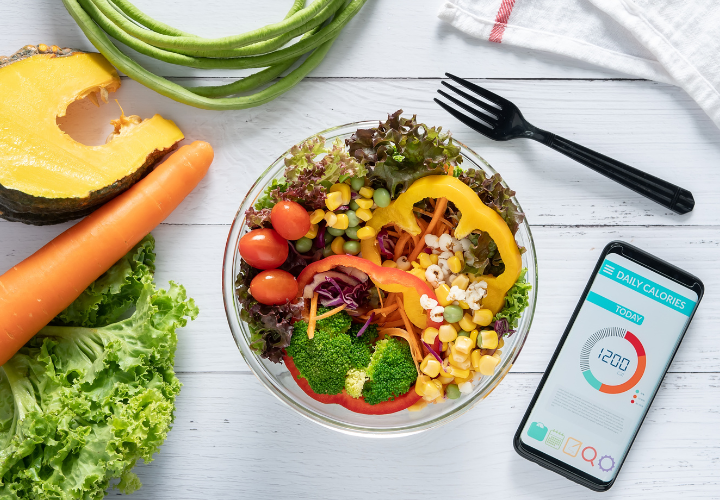
Learning how to structure meals this way allows people to feel physically full while still staying within their calorie goals. It’s one of the most powerful tools for long-term weight management. And it’s a skill that can absolutely be learned.
Here’s the part that many people at the beginning of their journey struggle to believe.
When someone:
Something interesting starts to happen.
Blood sugar stabilizes. Appetite signaling improves. Food loses that frantic sense of urgency. The constant mental tug-of-war around eating begins to fade. In other words, the body starts regulating itself more effectively. This is the stage where people often say things like:
“I don’t feel obsessed with food anymore” or “I was able to eat just one cookie and feel satisfied without having to go back for more.”
And for someone who has spent years battling cravings and hunger, this shift can feel almost miraculous. But it didn’t happen by accident. It happened because they learned how to eat in a way that supports their biology.
For someone at the very beginning of their journey, this stage might feel impossible to imagine. But it is absolutely achievable. It just requires commitment—not only to eating less, but to learning how to eat well.
One of the most important tools to utilize during this process is food tracking. I know—food tracking is not fun and it’s not glamorous. No one wakes up excited to log their lunch into an app. But tracking provides something incredibly valuable: Awareness and Accountability.
When someone tracks their food intake, they can see:
Without tracking, people are often guessing. And we humans are notoriously bad at estimating what we eat. (Studies repeatedly show that most people underestimate their intake—sometimes by hundreds of calories per day.) So. Tracking doesn’t have to be forever. But during the habit-building phase, it can be an incredibly powerful educational tool. And if you are on a GLP-1 through us, we will ask that you do so daily.
Here’s a question that I sometimes ask patients—gently, but honestly. If someone is not willing to track their food intake and make meaningful dietary changes beyond simply “eating less of the same foods”…
Are they truly committed to being healthy? Because long-term health requires intentional choices. Weight loss alone is not the ultimate goal. The real goal is health, vitality, strength, and longevity. Being smaller does not automatically equal being healthier, feeling better, or even necessarily feeling more confident. If we have no strength or lean muscle on our bodies, we will often be disappointed in the result, even if weight loss is achieved.
And the simple truth is that the habits that lead to sustainable health require daily effort.
At MyHealth1st, we absolutely recognize the value of GLP-1 receptor agonists. They can be incredibly helpful when used appropriately. But our approach is very intentional.
Our goal is to find the lowest effective dose that helps reduce “food noise” and gives patients enough breathing room to start building new habits.
And importantly:
That support is meant to be temporary. The GLP-1 helps to open the door. But the long-term goal is for patients to eventually walk through that door on their own. Because lifelong dependence on any medication isn’t the objective. Sustainable health is.
This is exactly where health coaching becomes essential. While GLP-1s can change appetite.
They don’t teach:
Health coaching fills that gap.
It provides guidance, accountability, and personalized strategy during the process of behavior change. It’s about learning a new way of living — including incorporating other crucial habits such as movement, stress relief, and sleep hygiene. And yes, that learning process sometimes involves troubleshooting, setbacks, course corrections, and the occasional “why did I eat an entire sleeve of crackers?” moment. It’s part of being human!
If you’re currently using a GLP-1 medication—or considering it—the most important question you can ask yourself is this:
Am I using this tool to build habits that will last? Or am I simply relying on the GLP-1 to do the work? Because the GLP-1 won’t always be there. But the habits you build today can support your health for decades to come.
For individuals who want personalized guidance with weight loss, nutrition, and habit development — MyHealth1st offers a comprehensive health coaching program designed to help patients approach weight loss the right way.
Whether you’re using a GLP-1 or pursuing lifestyle-based weight loss alone, the goal is the same:
Construct a way of eating (and a way of living) that supports both your health and weight loss maintenance long-term. And maybe even learn to enjoy the process along the way! Because in the end… sustainable health isn’t built on shortcuts and it doesn’t come via a prescription. It’s built on habits. And those habits are worth learning.
We offer a Lifestyle Health Coaching Program designed for people who want targeted help with weight loss, body-composition optimization, healthy habit integration. Here’s what it includes:
If you’re interested in personalized support, whether you are on a GLP-1 or not, contact us today, and we’ll get you scheduled with one of our health coaches for a Kickstart.
I’m Erin, and I’m a National Board Certified and Functional Medicine Certified Health Coach. If you’re seeking some humor, support and encouragement in your corner as you work toward your weight loss goals, consider signing up for MyHealth1st’s weight loss program or some health coaching sessions. I’m excited to meet you and work with you to make your goals a reality.

Erin is a National Board Certified and Functional Medicine Certified Health Coach with a passion for fitness, holistic wellness, and ethical food production.