In recent years, you might’ve noticed something happening on a broad scale: people are losing a lot of weight.
That’s good, right?
Unfortunately for many, that weight loss is accompanied by something unwelcome: a loss of lean tissue (i.e., muscle). Why? One under-recognized culprit is the growing use of GLP-1 receptor agonists (medications originally developed for type 2 diabetes that are now widely used for weight loss). Don’t get me wrong: these peptides have been life-changing for many folks. But they also set the stage for a body‐composition dilemma. Sure, fat may come off. But so might muscle (and therefore strength), unless we approach weight loss strategically. And in case you were wondering — this can happen with weight loss whether someone is taking a GLP-1 or not. However, there can be an even greater risk with GLP-1 use, since weight loss tends to happen more rapidly.
Here’s the deal: if you drop pounds but lose a substantial amount of muscle mass, you may end up lighter — but also slower, weaker, more insulin‐resistant, and more at risk for frailty down the line. That’s a tradeoff we want to avoid. So let’s dive into why this is happening, why it matters, and how you can “lean‐bulk” your way to better long-term health.
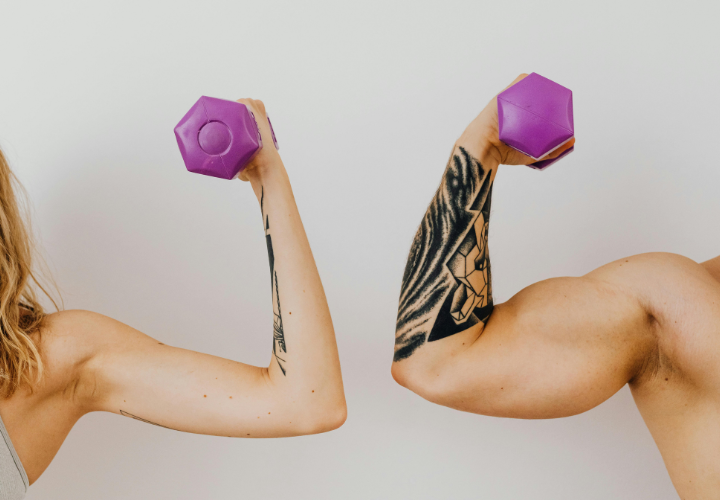
When someone takes a GLP-1 agonist (like semaglutide or tirzepatide), the aim is often to reduce appetite, slow gastric emptying, and blunt “food noise.” That’s all fine. BUT, if it results in too much appetite suppression, you may end up consuming less protein, less overall energy, and fewer of the stimuli your muscles depend on to stay robust. In other words: the fat might come off, but so might the muscle.
Muscle is not just a “cosmetic” thing. It’s metabolically active tissue that plays a critical role in glucose disposal (hence insulin sensitivity), basal metabolic rate, mobility, functional independence, and resilience in the face of stress (such as illness, injury, or aging). When muscle mass drops:
We’re witnessing, all around the world, a kind of “sub-optimal body composition epidemic”: folks who hit a number on the scale — but who aren’t as strong, as mobile, or as metabolically healthy as they could be. The number looks good, but the quality behind it? Not so much. And when you’re using GLP-1s, the risk is accentuated because the appetite suppression can make getting enough protein and overall nutrition trickier.
Let’s imagine two scenarios:
Scenario A: Erin loses 20 pounds of fat and retains virtually all her muscle. Her strength stays the same or improves, her insulin sensitivity improves, her resting metabolic rate remains robust, and she enjoys a mobile and active lifestyle.
Scenario B: Erin loses 20 pounds, but 10 of that is muscle. Her strength drops, her resting metabolic rate falls, she feels fatigued, her risk of sarcopenia (muscle loss from aging) creeps up, and she starts losing autonomy as she’s afraid of falling and injuring herself.
Which scenario would you prefer? I’ll take scenario A every time.
Here’s why the muscle loss pathway is risky:
In short: weight loss is great, but not at the expense of the very tissue that supports your vitality. We must be careful that GLP-1–based or other weight‐loss interventions don’t become “fat loss at the cost of muscle loss.”
“But coach,” you say, “I want to lose fat, not bulk up.” Totally fair. “Lean bulking” is not about getting massive. And believe me, you won’t. Unless that’s your goal, of course. It’s about adding or maintaining muscle while shedding fat — or at least changing body composition in a positive way. It’s the sweet spot: enough resistance training + enough protein + smart nutritional strategy = muscle preservation or modest gain, while fat accounts for your net change. Here are the key pillars:
Muscle is made of protein. Simple, but often overlooked. To preserve or build muscle, especially while in a calorie deficit (or when appetite is suppressed via GLP-1), you must prioritize high-quality protein at each meal. Aim for roughly 1.6–2.2 grams of protein per kilogram of body weight per day (in many cases), depending on your body composition goals, training level, age, and blood type.
Why? Keep in mind that your muscles are in an anabolic/catabolic tug-of-war all day long. Every meal is an opportunity to tip the balance toward anabolism (building) rather than catabolism (breakdown). A protein‐forward diet ensures you have the building blocks and the signal to keep the muscle happy and growing.
Consuming protein is only one piece of the puzzle. Your muscles need a stimulus (e.g. lifting weights, push-ups, squats, deadlifts, body-weight work, etc.) to trigger adaptation. Resistance training tells your body: “Hey, keep or build this muscle — I still need you for real world strength.” Without it, even a high-protein diet will fail to preserve or build muscle optimally.
The best results come when you time protein intake around your training sessions (pre/post) and ensure you spread protein evenly across meals (rather than bundling all at dinner). Spreading 20-40 grams of protein per meal is more effective than having one mega-meal containing 60 grams and starving the rest of the day.
If you’re aggressively calorie-restricting (especially when using GLP-1s, which blunt appetite), you risk entering a chronic energy deficit. That’s okay briefly, but if prolonged too much, your body will break down muscle for fuel. Instead, aim for a moderate deficit (e.g., 300-500 calories per day) and focus on slow and steady fat loss. This is where “lean bulking” has an interesting twist: you might even aim for a very slight calorie surplus (if appropriate) while training hard, so that you lose fat and gain muscle — or at minimum, hold muscle while fat comes off.
Now let’s nerd‐out together just a little: of all the amino acids, one stands out when it comes to lean bulking — Leucine. It isn’t just a building block; it also acts as a signal to your muscle cells to turn on the machinery of protein synthesis (the process of building new muscle protein).
Researchers talk about a “leucine threshold” (or “trigger”) — the idea that you need to get a certain amount of leucine in the bloodstream after a meal to optimally stimulate muscle protein synthesis (MPS). Studies show that around 2.5 to 3 grams of leucine in a meal is a practical benchmark for maximally stimulating MPS. This is especially true in older adults, since older adults tend to have “anabolic resistance” (meaning, they need more stimulus to preserve muscle). In practical terms: if whey protein has ~11% leucine content, then ~27 grams of whey (~30 grams of total protein) would deliver ~3 grams of leucine.
Why does this matter in the GLP-1 era? Because when appetite is suppressed and you’re eating less overall, the risk is that each meal may be too small to hit the leucine threshold, thus blunting the anabolic signal and preventing our body from building or maintaining muscle. Combine that with less training stimulus, and you’ve got a major recipe for muscle loss.
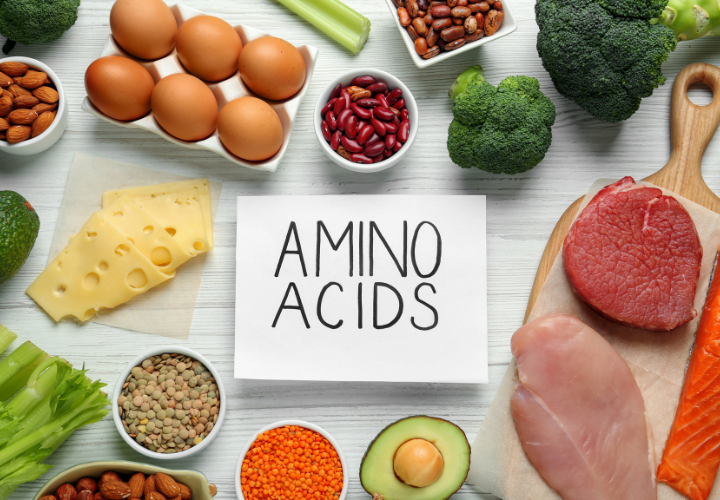
At MyHealth1st, we like to give you every tool possible, so you’re not just relying on whole foods alone — especially when appetite is challenged. That’s where Perfect Amino comes in. You’ve probably heard us talk about this one.
Here’s how Perfect Amino can help:
Important note: It’s not a magic bullet. You’ll still need your clean, whole food/protein-rich meals and training. Think of Perfect Amino as an aid — especially useful on days when your appetite is low, you’re training hard, or you’ve got a travel/compromise meal. Use it in addition to (not instead of) good food and resistance training.
At MyHealth1st, we do utilize GLP-1 medications when appropriate. We recognize the power that these peptides have, especially for individuals who struggle with overlapping obesity, insulin resistance, metabolic syndrome, or those who have tried “eat less & move more” and keep hitting a wall.
However (and this is crucial) our philosophy is:
In short: GLP-1s are a tool, NOT a substitute for the fundamental work of preserving muscle, strength and metabolic health. Nor are they a substitute for learning how to properly consume foods for optimal health. Our goal with GLP-1s is to quiet the noise, not silence your ability to eat.
To sum all this up, here’s a practical blueprint you can modify:
Imagine you’re 70 years old. You’ve maintained your muscle, you’ve stayed strong, you can lift your grandkids, climb stairs with ease, carry groceries without huffing and puffing, and maybe even hike or travel. You’re independent, you’re moving, you’re thriving.
Now imagine an alternate you at 70 who has lost significant muscle mass in their 40s/50s due to poor body composition. Over time this has resulted in you possessing less strength, a slower gait, more difficulty recovering from illness, more risk of falling, more risk of needing assistance. Which scenario sounds more fun? The version that becomes your reality is up to you.
So while the scale might say you’re down 10 or 20 lbs., let’s not celebrate until we ask: What did you lose, and what did you keep? If you lost fat and kept muscle, high five. If you lost fat but also lost muscle and strength, then we need to reevaluate our approach.
At the end of the day, lean bulking isn’t about appearance, or looking like you could audition for a Marvel role. It’s about being the strong, agile version of yourself that can handle life, aging, and changes with resilience. It’s about looking good, feeling capable, and investing in the future version of you.
If you’re thinking, “Okay, I get it! I want to lean bulk, not just lose fat,” we can help. We offer a Health Coaching Program designed for people who want targeted help with weight loss, body-composition optimization, healthy habit integration (and yes, muscle preservation). Here’s what it includes:
If you’re interested in personalized support as you work to build the version of you that’s strong, agile, healthy, and independent — rather than just being “lighter but weaker” — we’d love to help you get there. Contact us today, and we’ll get you scheduled with one of our awesome health coaches for a Kickstart.
I’m Erin, and I’m a National Board Certified and Functional Medicine Certified Health Coach. If you’re seeking some humor, support and encouragement in your corner as you work toward your weight loss goals, consider signing up for MyHealth1st’s weight loss program or some health coaching sessions. I’m excited to meet you and work with you to make your goals a reality.

Erin is a National Board Certified and Functional Medicine Certified Health Coach with a passion for fitness, holistic wellness, and ethical food production.