


In functional and integrative medicine, we look for root causes. We ask better questions. We zoom out and consider the interconnected systems of the body rather than isolating symptoms.
When we do that, one truth becomes impossible to ignore:
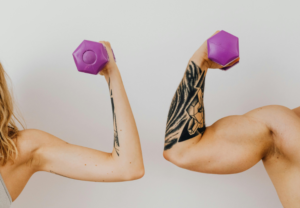
For women especially, skeletal muscle is not simply aesthetic tissue or athletic performance tissue. It is a dynamic, metabolically active, hormone-communicating organ that profoundly influences blood sugar regulation, inflammation, longevity, and resilience through perimenopause and beyond.
If we want to address insulin resistance, metabolic syndrome, fatigue, frailty, weight gain, or accelerated aging, muscle must be part of the conversation.
Let’s explore why.
Skeletal muscle is now recognized as an endocrine organ. When muscle contracts, it releases signaling molecules called myokines (Pedersen & Febbraio, 2012). These chemical messengers communicate with:
This communication regulates inflammation, glucose metabolism, fat oxidation, and even cellular repair.
In other words, every time you strength train, you are activating hormone-like signaling pathways that influence your entire body.
Muscle is not passive tissue. It is biologically active and systemically influential.
From a functional medicine perspective, blood sugar stability is foundational. And muscle is central to that stability.
Skeletal muscle is responsible for up to 80% of insulin-mediated glucose uptake after meals (DeFronzo & Tripathy, 2009). When you eat carbohydrates, your muscles act as a primary storage site for glucose.
When muscle mass is low or metabolically impaired:
When muscle mass is higher and metabolically active:
Muscle is one of the most powerful regulators of metabolic health we have access to—and unlike genetics, it is modifiable.
Insulin resistance underlies many chronic conditions we see in clinical practice:
Resistance training increases the expression of GLUT-4 transporters in muscle tissue, allowing glucose to enter cells more efficiently—even independent of insulin signaling (Strasser & Pesta, 2013).
This is one reason strength training is often more impactful for metabolic health than cardio alone.
From a functional medicine lens, building muscle is not about appearance. It is about restoring insulin sensitivity at the cellular level.
Muscle is not only about metabolic disease prevention—it is also a predictor of survival.
Low muscle mass and low strength are associated with increased all-cause mortality (Srikanthan & Karlamangla, 2014). Grip strength alone is strongly correlated with cardiovascular events and overall mortality risk (Leong et al., 2015).
Muscle represents physiological reserve. It reflects:
In clinical practice, we often say: You don’t rise to the level of your goals; you fall to the level of your reserves. Muscle is a critical reserve.
The menopausal transition is a metabolic inflection point.
Women can lose 3–8% of muscle mass per decade beginning in their 30s, with a more rapid decline during perimenopause.
Without intervention, this contributes to:
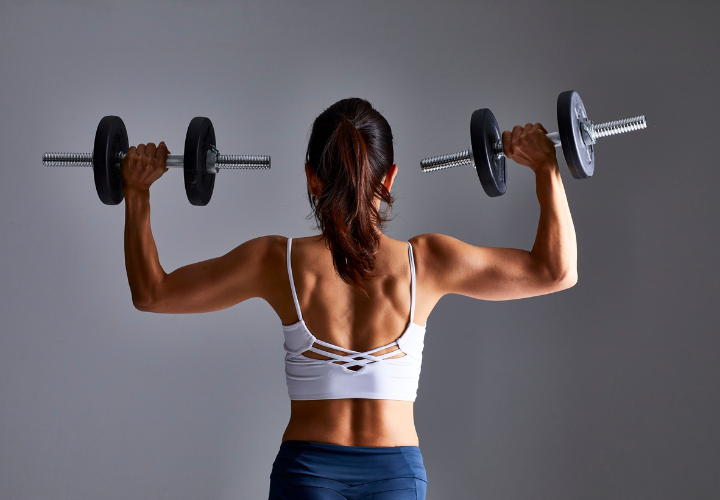
Strength training during perimenopause is not optional self-care—it is metabolic protection.
Muscle is a stabilizer during hormonal transition.
Peak muscle mass is achieved in a woman’s 20s to early 30s. After that, decline begins gradually.
Think of muscle as a metabolic savings account.
The more you build early, the more resilience you carry into midlife and beyond.
Women who enter perimenopause with higher lean mass often experience:
Building muscle early is preventive medicine.
Exercise stimulates muscle growth. Protein builds it. BOTH are required. You can eat all the protein in the world, but without exercise, you will NOT stimulate muscle growth and excess calories of protein are converted to fat and can put a strain on the kidneys.
The current Recommended Dietary Allowance (0.8g/kg/day) prevents deficiency but is not optimal for preserving or building muscle—especially in active or midlife women.
Research supports higher intakes for metabolic health and muscle maintenance:
For a 150-pound (68 kg) woman, that equals approximately:
Protein provides essential amino acids—particularly leucine—which trigger muscle protein synthesis.
Adequate protein:
Insufficient protein intake is one of the most common barriers to muscle preservation in women. The other is lack of strength training.
Aim for 25–40 grams per meal, ideally across three to four meals daily.
Instead of:
Consider:
Muscle protein synthesis is stimulated multiple times per day. Spreading protein intake is more effective than eating most of it at dinner.
Animal-based:
Plant-based:
Many women underestimate protein intake. Tracking your intake can be illuminating and help you meet your targets . Not all proteins are created equal, and when striving to get the most bang for your protein buck, note that eggs have a protein utilization of 48% while whey protein is only 18% and soy protein a mere 16%. This does not mean go crazy on eggs, but to keep things in perspective and include a wide variety of sources matching your individual type. Learning more about the science behind protein synthesis and the utilization of essential amino acids can help you better understand our approach to protein intake and amino acid supplementation with Perfect Aminos. Integrated properly throughout the day to support muscle growth and repair Perfect Aminos can help ensure you get the results you desire.
Below are sample frameworks appropriate for different life stages. Programs should always be personalized based on medical history and goals.
Goal: Maximize peak muscle mass and strength
Frequency: 3–4 days per week
Sample Full-Body Program (3 Days)
Day A
Day B
Alternate A and B weekly. Focus on progressive overload.
Goal: Maintain lean mass, protect metabolism
Frequency: 3 resistance sessions + 1–2 low-intensity cardio sessions
Lower Body Day
Upper Body Day
Full Body Day
Add 20–30 minutes of Zone 2 cardio twice weekly.
Goal: Prevent sarcopenia and maintain function
Frequency: 2–3 sessions per week
Day A
Day B
Emphasize controlled tempo and gradual progression.
Because in women’s health, muscle is not optional.
It is foundational.
When we see:
We must ask: Is muscle mass sufficient?
It supports:
For women at every stage of life, muscle is not about aesthetics. It is about agency, resilience, and long-term vitality. If you are ready to take care of your muscle so it can take care of you, reach out for a kickstart consultation or sign up for our lifestyle program today – your muscles will thank you for it!
References

Dr. Jane Bowser is a certified health coach, nutritionist, and personal trainer, blending academic expertise with a passion for holistic wellness.