Online ordering is temporarily unavailable for some products. We are updating our payment-processing system. To place an order, please call 336-306-9393 or send us a secure message in your patient portal. Please do not send payment information or private medical information by email or text. Dismiss
There is a growing interest as of late in getting more out of the human body. Stronger muscles. Better skin. More energy. Sharper focus. Slower aging. Better performance. And, of course, looking good while doing all of it. From protein powders and creatine to hormone optimization, peptides, and increasingly elaborate skincare routines, people are exploring more ways than ever to influence how they look, feel, and function.
Two terms you’ll hear frequently in these conversations are looksmaxxing and biohacking. Looksmaxxing refers to the practice of maximizing physical attractiveness through changes to appearance, grooming, fitness, skincare, nutrition, and, in more extreme cases, medical or cosmetic interventions. Biohacking is a broader term describing the use of lifestyle changes, technology, supplements, and other interventions to improve or optimize biological function.
At their core, both movements reflect something understandable: people want to feel confident, healthy, attractive, capable, and in control of their own well-being. And hey, there is absolutely nothing wrong with wanting to improve yourself. In fact, taking an active interest in your health is something we strongly encourage here at MyHealth1st. But there is a big difference between making informed decisions that support your health, and experimenting with every new substance or protocol that promises to turn you into a biologically optimized superhero.
Not all biohacking is created equal. In fact, the spectrum is enormous. On the lower-risk end, we have what might be considered soft optimization. These are relatively straightforward habits that support health and appearance. This includes things like:
These practices aren’t particularly glamorous, and they rarely come with a dramatic before-and-after photo or video. But they are foundational to long-term health.
Then we move into more involved interventions, such as targeted supplementation, advanced skincare treatments, biomarker testing, hormone evaluation, and certain regenerative therapies. Some of these options have meaningful evidence behind them. Others are still being studied, and their appropriateness depends heavily on the individual and the circumstances.
Further along the spectrum, things become considerably more concerning… Crash dieting, unsupervised hormone manipulation, anabolic steroid use, questionable injectable peptides, black-market compounds, and invasive cosmetic procedures can introduce significant risks.
The problem here isn’t necessarily the desire to improve. It’s the assumption that more intervention automatically means better results. (It doesn’t.)
Part of the appeal is obvious. People like results, and quick ones at that. Social media has created an environment where physical transformations, impressive athletic performances, elaborate skincare routines, and dramatic health improvements are constantly displayed for public consumption. And the algorithm is very good at figuring out what catches your attention.
Watch a video about improving your jawline for a little too long, and suddenly you’re seeing facial exercises, grooming techniques, supplements, and cosmetic procedures. Watch a few videos about muscle growth, and before long, your feed is filled with workout routines, protein recommendations, creatine protocols, hormone discussions, and peptide injections. Repetition creates familiarity, and familiarity can create a false sense of credibility. Add in a little community status, the fear of falling behind, and the promise of a shortcut, and it’s easy to understand why people become interested.
There is also a psychological component at play. Optimization offers the appealing idea that we can control more about our biology than we previously thought. Some of that is true… Our daily habits, nutrition, exercise, sleep, and medical decisions can meaningfully influence our health. But the internet sometimes takes that concept and runs with it.
Suddenly, normal aging becomes a problem to solve, ordinary fluctuations in body composition become evidence of failure, and every minor imperfection requires some new intervention. At some point, self-improvement can quietly turn into an endless project of trying to fix yourself. This in turn can begin to wreak havoc on our mental health and peace of mind.
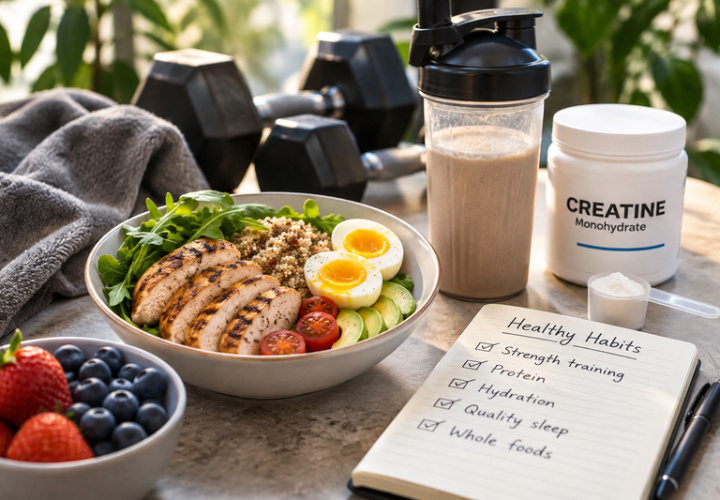
Before we throw the entire optimization movement out with the remnants of our supplement-filled shaker bottle, there are some genuinely positive developments worth recognizing here.
For one, more young adults are becoming interested in strength training, understanding protein intake, improving their nutrition, and learning how their bodies respond to exercise. That’s a good thing! Resistance training is one of the most valuable tools we have for maintaining muscle mass, supporting metabolic health, improving physical function, and preserving independence as we age.
Adequate protein intake supports muscle repair, recovery, and the maintenance of lean tissue. It becomes especially important for individuals who exercise regularly, are trying to build muscle, or are working to preserve muscle during weight loss.
And yes, creatine deserves some attention, too. Creatine is one of the most extensively studied sports supplements available. Research supports its ability to improve performance in certain high-intensity activities and enhance strength-training outcomes when combined with an appropriate exercise program.
It works by helping replenish phosphocreatine, which supports the body’s rapid production of ATP, its primary cellular energy currency. There’s even some pretty good evidence that it can help to mitigate cognitive decline and improve certain cognitive functions.
However, creatine isn’t a shortcut to building muscle, and its benefits depend on the context in which it is used. The quality of the product matters. So do the individual’s age, health history, medications, hydration status, and specific goals. Anyone with underlying medical conditions, particularly kidney-related concerns, should discuss supplementation with a qualified healthcare professional.
The larger point is that supplements should complement a healthy lifestyle, not attempt to replace one. You cannot consistently sleep only five hours per night, skip meals, avoid exercise, and expect a handful of supplements to compensate. Biology is annoyingly stubborn that way.
Before adding another product to your routine, go back to basics and consider whether you’re already doing the things that have the greatest impact.
Few topics in the current optimization conversation generate as much curiosity, confusion, and questionable internet advice as peptides. First, let’s clarify what we’re talking about.
Peptides are short chains of amino acids. They occur naturally in the body and participate in a wide variety of biological processes, including hormone signaling, immune function, tissue repair, and metabolism. Some peptide-based medications have legitimate medical applications and have undergone rigorous clinical testing and regulatory review. Others are being investigated for potential therapeutic uses. And, some are being sold online with impressive marketing claims and considerably less evidence.
The word peptide itself does not tell you whether something is safe, effective, or appropriate for human use. Therefore, this is where understanding the distinctions becomes particularly important.
Certain peptide-based medications have been evaluated through the FDA approval process for specific medical indications. Their approved uses, dosing, safety information, and potential side effects are documented. However, FDA approval for one indication does not mean a medication is appropriate for every person or every purpose. A medication approved for a particular medical condition should not automatically be viewed as an all-purpose longevity, muscle-building, or recovery tool.
Compounding involves preparing a medication to meet an individual’s specific medical needs when an appropriate FDA-approved option cannot adequately meet those needs. Compounded medications can serve an important role in healthcare, but there is a critical distinction: compounded drugs are NOT FDA-approved.
The FDA does not verify their safety, effectiveness, or quality through the same premarket approval process used for FDA-approved medications. Poor-quality compounding can introduce risks such as contamination, incorrect concentrations, and dosing errors. Compounding should have a legitimate clinical rationale, appropriate oversight, and a qualified prescribing professional involved. It should not simply be another way to access whatever compound is trending online.
This is an area where consumers should be informed, discerning, and particularly mindful of product quality and medical oversight. Peptides have generated considerable interest for their potential applications in muscle development, tissue repair, metabolic health, skin rejuvenation, and healthy aging. Some of the names generating the most attention include BPC-157, TB-500, the Wolverine Stack (a combination of BPC-157 and TB-500), the Glow Stack (typically combining GHK-Cu, BPC-157, and TB-500), and sermorelin. However, not all products marketed online are created equal. Many products labeled “research use only” are purchased and self-administered by individuals without medical guidance, sometimes sourced from overseas vendors with limited transparency around manufacturing standards, testing, purity, concentration, or sterility. In these situations, consumers may have little assurance that the product contains what the label claims or that it is appropriate for human use.
Regulatory discussions surrounding peptides are evolving as scientific understanding and drug-development standards advance. The FDA has raised specific concerns about the safety data, immune responses, impurities, and potential adverse effects associated with certain peptide substances proposed for compounding. These concerns deserve consideration, BUT regulatory status alone should not be confused with a complete assessment of a compound’s therapeutic potential.
The science surrounding peptide therapies continues to evolve, and there is growing interest in their potential benefits. Certain peptides are being explored and utilized in clinical settings under the guidance of knowledgeable providers, with products obtained through reputable U.S. compounding pharmacies when legally permissible. For example, BPC-157 and TB-500 are commonly explored for their potential roles in tissue repair and recovery, sermorelin may be considered for its effects on growth hormone signaling, and GHK-Cu (a copper-binding peptide) is used in certain topical or injectable formulations for skin health and rejuvenation. At MyHealth1st, our providers have experience incorporating select peptide therapies into individualized treatment plans, including BPC-157, TB-500, sermorelin, and GHK-Cu in prescription skincare formulations. We do not routinely offer every popular peptide combination or “stack,” and the appropriateness of any therapy depends on the individual and the available evidence.
The biggest takeaway is this: where a peptide comes from, how it is manufactured, how it is administered, and who is overseeing its use matter enormously. An injectable product purchased from an unfamiliar online vendor, particularly one sourced internationally and accompanied by an internet dosing protocol, is not equivalent to a product obtained through a reputable pharmacy and prescribed within an individualized clinical plan. Peptide therapy should involve appropriate screening, an understanding of the available evidence and limitations, qualified medical supervision, and ongoing monitoring. The goal should be to explore emerging therapies responsibly, not to turn your body into an unsupervised science experiment.
There is another side of this conversation that deserves just as much attention as the supplements and medical interventions, and that is the topic of body image.
Wanting to look better or improve physical performance is not inherently unhealthy. But optimization can become problematic when personal worth becomes tied to appearance, measurements, or perceived imperfections.
Consider some warning signs:
This is particularly important for parents of teenagers and young adults. Many of the online communities surrounding looksmaxxing and extreme body optimization appeal to individuals who are still developing their sense of identity and self-worth. Some content promotes reasonable habits. Other content encourages dangerous practices, unrealistic expectations, and an unhealthy relationship with the body.
And body image struggles don’t always look the way people expect. Disordered eating and body dysmorphic concerns can involve an intense pursuit of muscularity, leanness, or physical perfection, not just a desire to lose weight.
If concerns about appearance begin interfering with daily life, relationships, eating habits, or emotional well-being, qualified mental-health support is important. These struggles deserve compassion and appropriate care, not criticism or embarrassment. “Health improvement” should help people feel more capable of living their lives, not make them afraid to participate in them.
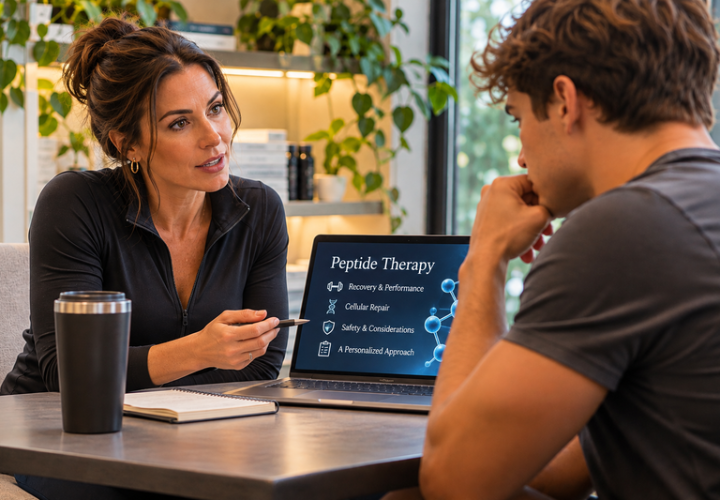
At MyHealth1st, we believe there is a valuable middle ground between dismissing every new health intervention and enthusiastically endorsing every product that promises extraordinary results.
We DON’T believe people should be discouraged from exploring ways to improve their health, appearance, performance, or longevity.
We DO believe those decisions should be individualized, evidence-informed, and grounded in an understanding of the person’s actual health.
So, how do you approach biohacking and health optimization without getting caught up in the latest internet trend?
We recommend a simple hierarchy.
Before investing in an elaborate supplement regimen or exploring advanced therapies, evaluate the basics. Are you sleeping well? Eating enough protein and essential nutrients? Getting regular physical activity? Strength training? Managing stress? Allowing adequate recovery? These factors influence nearly every aspect of health, and they provide the foundation upon which more targeted interventions can work.
“Optimize my health” sounds great, but what does that actually mean? Are you trying to improve energy, build muscle, support hormone health, improve recovery, address chronic inflammation, enhance skin quality, or investigate unexplained symptoms?
Different goals require different approaches. Someone struggling with persistent fatigue needs a different evaluation than someone trying to improve athletic performance or address a recurring tendon injury. The more clearly you define the goal, the easier it becomes to determine which interventions are worth considering.
One of the biggest problems with online health advice is that it often assumes everyone needs the same intervention. But, two people with identical symptoms may have very different underlying contributors.
Biomarker testing can help provide a more complete picture of factors such as metabolic health, thyroid function, hormone levels, nutrient status, inflammation, and other physiological processes. At MyHealth1st, our Level 2 Biomarker Assessment is designed to provide a broader look at these interconnected systems. Rather than randomly adding supplements or chasing individual symptoms, establishing a baseline can help identify potential imbalances and determine where to focus our efforts. Sometimes, the most valuable optimization strategy isn’t adding something new. It’s discovering what your body actually needs.
Not every intervention has the same level of scientific support. Some approaches are well established. Others have promising but limited research. And some are largely supported by testimonials, marketing, and a very enthusiastic online community.
Before starting a supplement, medication, or procedure, consider:
A qualified healthcare professional can help distinguish reasonable options from unnecessary risks.
Some interventions require more than a quick online search and a credit card. Hormone-related concerns, persistent pain, prescription medications, injectable therapies, and advanced regenerative treatments warrant appropriate clinical evaluation.
For individuals experiencing symptoms that may warrant further hormone evaluation, our Hormone Optimization approach focuses on understanding individual needs and considering appropriate options.
For those dealing with persistent joint, muscle, or tendon pain, our Pain & Regenerative Therapy Evaluation provides a focused assessment to help identify potential treatment options.
Likewise, individuals interested in improving skin quality and supporting collagen production can explore our educational resources on microneedling with PRF and stimulating collagen and elastin without synthetic fillers.
The goal is to understand the available options, evaluate their appropriateness, and make informed decisions rather than simply following whatever protocol is circulating online.
Optimization should involve more than starting an intervention and hoping for the best… Are your symptoms improving? Is your strength increasing? Are you recovering better? Are your biomarkers moving in a favorable direction? Are there unwanted side effects?
If an intervention isn’t producing the intended benefit, it may need to be adjusted, discontinued, or replaced with a different approach. More importantly, the ultimate goal should be improved health and quality of life, not simply accumulating more products, procedures, or protocols.
There is something refreshing about taking an active role in your health. Learning about nutrition, understanding your biomarkers, building muscle, improving your skin, and exploring appropriate medical interventions can all be worthwhile investments.
Even seemingly simple tools deserve attention. For example, BodyHealth Perfect Aminos is one nutritional option people may explore when looking for convenient essential amino acid support. But it belongs in the context of an overall nutrition strategy, not as a replacement for adequate dietary protein or overall fuel.
Similarly, skincare and regenerative aesthetics may offer additional options for people interested in supporting healthy-looking skin. Our article on DMSO: Pain Relief, Skin Regeneration & What You Should Know explores another frequently discussed compound and the considerations surrounding its use.
The important thing is recognizing that there is no universal optimization protocol. Your biology is individual. Your health history is individual. Your goals are individual. And your approach should reflect that.
The most successful long-term health strategies aren’t necessarily the most complicated or expensive. They’re the ones that address the right priorities, are appropriate for the individual, and can be maintained over time.
You can pursue strength without abusing hormones. You can improve your skin without chasing every cosmetic trend. You can support recovery without injecting an unverified research compound. And you can take your health seriously without turning every waking moment into a biological performance review.
Perhaps the most important question to ask before starting your next health trend, supplement, or intervention is this:
Is this helping me build health, or only helping me chase an image?
At MyHealth1st, we believe the best kind of optimization is the kind that helps you feel stronger, function better, age well, and enjoy your life.
Start with understanding your body. Build the foundation. Measure what matters. And make your next move an informed one.
Ready to take a more individualized approach to your health?
Consider scheduling a Level 2 Predictive Biomarker Assessment with MyHealth1st. Establishing a baseline can help identify potential imbalances and determine which areas deserve your attention before investing in complex supplement or therapy protocols.
At the end of the day, the goal shouldn’t be to “biohack” your way into becoming someone else. The goal should be to give your body the support it needs to be the healthiest version of itself.

Erin is a National Board Certified and Functional Medicine Certified Health Coach with a passion for fitness, holistic wellness, and ethical food production.