Protein has become the nutrient of the moment. It is stirred into coffee, baked into cereal, packed into snack bars, blended into shakes, and added to desserts that once made no health claim at all. That reflects a useful shift: more people understand that protein matters. But it has also created a new shortcut in our thinking. “High protein” is increasingly treated as shorthand for “healthy,” “weight-loss friendly,” or even “free.”
Then the scale stops moving—or starts moving in the wrong direction. If that sounds familiar, you may be asking: does protein make you gain weight? It can. Protein is a powerful tool for appetite control, muscle preservation, recovery, and healthier body composition, but it still has to fit within your total energy needs and the rest of your nutrition plan.
The short answer: Protein supports weight-management goals; it does not make total calorie intake irrelevant.
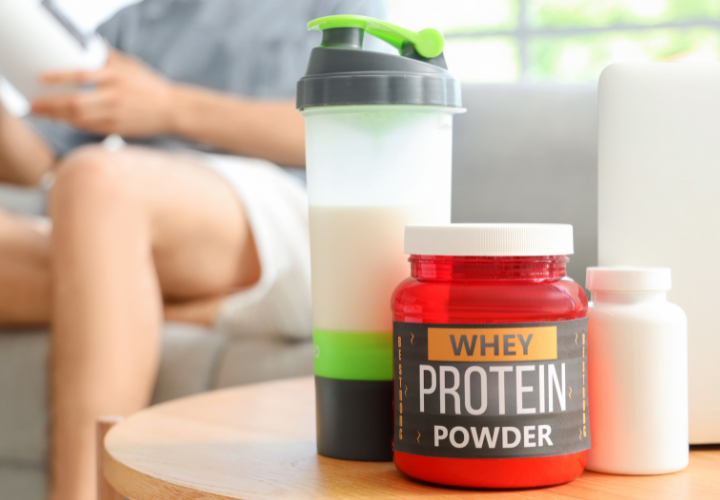
Protein supplies amino acids, the raw materials your body uses to build and repair tissue. When adequate protein is paired with an appropriate resistance-training stimulus, it supports muscle protein synthesis—the process through which the body repairs and builds muscle. That matters for athletic performance, recovery, function, and healthy aging.
Protein can also improve satiety, helping a meal feel more satisfying. During a calorie deficit, a higher-protein pattern may help preserve lean mass, especially when combined with strength training, which is one reason protein is so important when the goal is fat loss rather than indiscriminate weight loss. Protein also has a higher thermic effect than carbohydrate or fat: your body expends more energy digesting, absorbing, and processing it.
Those advantages are real. They are why we emphasize protein in discussions of body composition and why resources such as Macros Matter: Protein and Muscle Is Medicine focus on protein, strength, and lean tissue. But an advantage is not an exemption from the larger energy equation, and just eating extra protein without strength training will not do much for building muscles or strength, much less maximizing healthy longevity.
Proteins provide about four calories per gram as do carbohydrates; less than half of that of fat, which provides 9 calories per gram. While your body uses more energy to digest protein than it does to digest fat or carbohydrates, that does not cancel out protein’s calories. If you regularly eat more calories than your body needs, you can gain weight—even if those extra calories come from high-protein foods.
In one controlled study, participants ate about 40 percent more calories than their bodies needed. They gained similar amounts of body fat regardless of how much protein they ate. Higher protein intake did affect how much lean tissue they gained and how much energy their bodies burned, but it did not prevent fat gain from overeating.
Other research supports the same basic idea: when calories are kept similar, eating more protein does not reliably reduce body weight, body fat, or waist size. Protein can help you feel full, preserve muscle, and recover from exercise, but a “high-protein” label does not automatically make a diet good for weight loss. Your total calorie intake, food choices, activity level, exercise habits, and ability to follow the plan all matter.
Most people do not gain weight because they suddenly begin eating enormous portions of chicken breast. The surplus usually arrives through small, well-marketed additions that never replace anything else.
None of these foods is automatically a problem. Shakes and bars can be convenient, and protein-enriched products can help some people meet a legitimate target. The issue is addition without accounting. A 250-calorie shake consumed every day on top of an already adequate diet is still 250 additional calories.
The scale reports total body weight, not the tissue responsible for the change. A higher number can reflect fat mass, lean mass, glycogen, water, food in the digestive tract, or some combination of these. When you increase resistance training, carbohydrate intake, sodium, or total food volume, short-term scale changes may have little to do with fat gain. Hard training can also produce temporary fluid shifts during recovery.
At the same time, “it must be muscle” should not become another automatic explanation. Meaningful muscle gain takes time and an adequate training stimulus. This is why body composition, waist measurements, progress photos, strength trends, clothing fit, and performance can tell a more complete story than scale weight alone. The lean-bulking approach and our discussion of the modern body composition crisis both reinforce the same principle: the quality of the weight you gain or lose matters.
Protein needs are personal. They vary with body size, age, health history, energy intake, training volume, recovery demands, food preferences, and the goal itself. Someone dieting while resistance training may have different needs than a sedentary adult, an endurance athlete, or an older adult focused on preserving function.
Once your needs are being met, adding more protein does not guarantee a proportional increase in muscle, fullness, or fat loss. There is no single grams-per-pound target that is ideal for everyone. The better question is: what protein intake supports your goal while leaving appropriate room for total energy, fiber-rich carbohydrate, essential fats, micronutrients, and foods you can sustain?
That is also why reducing protein indiscriminately is usually the wrong response to a plateau. The goal is alignment: match protein, calories, training, daily movement, and recovery to the outcome you want.
A minimally processed meal built around fish, eggs, poultry, lean meat, dairy, soy, beans, or lentils can provide protein within a broader package of nutrients. Add vegetables, fruit, whole-food carbohydrates, and appropriate fats, and the meal also delivers fiber, micronutrients, volume, and satisfaction.
That is not nutritionally identical to grazing all day on protein-enhanced snack foods. A product can contain protein and still be calorie-dense, highly processed, low in fiber, easy to overeat, or poorly matched to your needs. “High protein” on the front of a package tells you one fact. It does not tell you whether the product is nutrient-dense, minimally processed, satiating for you, or appropriate in context.
Supplements are best viewed as tools, not requirements. A shake may be useful when appetite is low after training, time is limited, or a whole-food meal is impractical. On another day, the same shake may simply duplicate protein and calories already supplied by breakfast or lunch. Context determines whether it closes a gap or creates a surplus. Before adding a product, ask what it is replacing, what need it serves, and whether a regular meal would support the goal more completely.
You do not need to track every bite forever. Short-term tracking can be used as a diagnostic tool—a way to replace assumptions with information. Choose several representative days, including at least one weekend day, and review the complete pattern.
Measure. Treat. Measure. Repeat. Establish the target, follow the plan, assess body composition and performance, and adjust based on results—not on a label or a guess.
Protein remains one of the most useful nutrition tools available, particularly for maintaining muscle during weight loss and supporting strength across the lifespan. But protein works best as part of a complete plan. If your weight loss has stalled, the answer may not be less protein. It may be better portions, fewer uncounted additions, more consistent movement, a stronger training signal, improved recovery, or a target that reflects your current body and goals.
The point is not to fear protein or chase it endlessly. It is to use the right amount, from foods that support your health, within an energy intake that matches the result you are trying to create.
Schedule a Kickstart Consult to establish personalized protein, calorie, and macro targets based on your goals, body composition, activity, and health history.

Dr. Jane Bowser is a certified health coach, nutritionist, and personal trainer, blending academic expertise with a passion for holistic wellness.