Botox has become almost synonymous with modern aesthetics. By temporarily reducing contraction in targeted facial muscles, it can soften wrinkles and create a smoother, more rested appearance. For many people, the appeal is simple: they like the way they look and feel more confident.
It’s no surprise botulinum toxin is one of the most popular non-surgical cosmetic procedures in the world. Yet emerging research raises an interesting question: does Botox affect emotions or other experiences beyond appearance?
There is absolutely nothing wrong with wanting to look your best. But at MyHealth1st, we believe there is a bigger conversation worth having.
What if facial muscles are doing more than creating wrinkles?
What if some of those movements also play a role in emotional processing, communication, social interaction, and even sexual function? And what if an aesthetic treatment that intentionally reduces facial movement deserves to be considered not only for what it does to wrinkles, but also for what else it may do?
That does not mean Botox is always dangerous, that everyone who uses it will experience negative effects, or that you should feel guilty for getting it. It simply means that informed aesthetics should involve the whole picture.
Before reaching for any one procedure, our starting point is simple:
We believe the goal of aesthetic medicine should not simply be to make someone look younger by immobilizing muscles or replacing lost volume. We want to support the health, structure, repair, and regenerative capacity of the skin itself.
That means looking at the bigger picture: hormones, nutrition, protein intake, collagen support, skin quality, cellular repair, inflammation, and the processes that determine how your skin actually ages.
Botox CAN have its place in aesthetic medicine. But it is only one tool, not the only path to youthful-looking skin. It’s also not necessarily the first resort one should be taking. Read on to discover some of the research surrounding Botox that gives us an even more important reason to consider that bigger-picture approach.
We tend to think of facial expressions as the result of emotions. You feel happy, so you smile. You feel angry, so you frown. You see the price of a carton of berries at the grocery store, and suddenly your eyebrows have opinions of their own. But researchers have long explored whether the relationship might work in the other direction, too.
This idea is known as the Facial Feedback Hypothesis. It suggests that facial muscles do not merely communicate emotions that already exist in the brain. The signals generated by those muscles may also feed information back to the brain and influence how emotions are processed or experienced. In other words, the relationship may work both ways..
Botox gives researchers a rather unusual way to investigate this. If you temporarily prevent someone from making a particular facial expression, what happens to the emotional processing that normally accompanies that movement?
Here is where things get especially fascinating. If frowning can contribute to negative facial feedback, could reducing the ability to frown actually improve mood? Researchers have investigated this possibility.
Multiple randomized controlled trials have examined glabellar botulinum toxin as a potential treatment for depression, and meta-analyses have reported improvements in depressive symptoms. (pubmed.ncbi.nlm.nih.gov) One proposed explanation is that reducing a persistent frown may interrupt a negative facial feedback loop. But we should keep our enthusiasm appropriately tethered to reality here.
Botox is not an antidepressant in a syringe. These findings do not mean cosmetic Botox should replace established treatments for depression, and researchers have also raised questions about study design, publication bias, blinding, and the size of the observed effects.
However, what the research DOES suggest is that facial muscle activity and emotional processing are connected in ways we are still learning to understand.
Your face is one of your body’s most sophisticated communication systems. You can say “I’m fine” while your eyebrows, eyes, and mouth are conveying an entirely different story.
Facial expressions help us communicate emotions and recognize emotions in other people. Some research has found changes in emotional-expression recognition following botulinum toxin treatment, while neuroimaging studies have demonstrated changes in brain activity involved in processing emotional faces. (nature.com)
Again, this does not mean Botox makes someone incapable of understanding emotions. It means the machinery involved in producing, perceiving, and processing facial expressions may be more interconnected than we once appreciated. And that brings us to an even more surprising question:
Yes, we’re going there. Our faces do not stop expressing emotion when we enter the bedroom. Facial expressions are part of sexual communication, but researchers have also questioned whether those expressions contribute to the experience of sexual pleasure itself.
A small 2018 study published in Scientific Reports explored this possibility in women receiving cosmetic botulinum toxin. Researchers used the Female Sexual Function Index, which evaluates desire, arousal, lubrication, orgasm, satisfaction, and pain. (nature.com)
Following treatment, Botox participants reported a decrease in overall sexual function, with particularly notable changes in the orgasm domain. Participants reported that orgasms were harder to achieve and less satisfying. The comparison group receiving other cosmetic treatments did not demonstrate the same pattern. (nature.com)
Researchers proposed that facial expressions associated with sexual pleasure may not simply communicate pleasure to a partner. They may also participate in the experience of pleasure itself.
But context matters. This was a small, quasi-experimental study involving women only, and the data were self-reported. The findings cannot establish that Botox causes sexual dysfunction, and larger studies are needed.
Therefore, the takeaway here is not “Botox ruins your sex life.” The takeaway is that facial movement may have a more important role in emotional and physical experiences than we typically realize.
Another consideration is what happens when facial muscles are repeatedly weakened over many years. Botulinum toxin is designed to produce temporary muscle paralysis, and muscle activity generally returns as its effects wear off. However, repeated treatment can influence muscle size and function over time.
Importantly, the current evidence does not establish that routine cosmetic Botox permanently paralyzes facial muscles. However, it does remind us that repeatedly changing muscle activity is not necessarily biologically irrelevant. The long-term effects of decades of repeated cosmetic treatment remain an area where we need more research.
There is another scientific question worth mentioning: how localized is botulinum toxin? Its intended action is at the neuromuscular junction near the injection site. However, experimental research has demonstrated retrograde axonal transport, meaning botulinum neurotoxin can travel along nerve pathways toward the central nervous system. This could potentially have effects on our neurotransmitters, and therefore our brain and nervous system function.
However, these findings have been demonstrated most clearly in laboratory and animal models, and the clinical significance for people receiving cosmetic injections remains uncertain. So, please don’t panic. Botox does not necessarily travel to your brain and cause brain damage. The research does not clearly establish that. It is another example of why it’s important to educate ourselves, to understand what we are putting into our bodies, and to consider the evidence when making aesthetic decisions.
Not necessarily. This is not an anti-Botox manifesto. If you love your Botox, feel good about your results, and have decided that temporarily reducing certain muscle movements fits your goals, that is your decision. We are not here to shame anyone for wanting smoother skin. But we also don’t believe folks should be led to think Botox is the only way to look youthful. At MyHealth1st, we start with a different question:
Instead of only stopping the muscle from creating the wrinkle, what can we do to help the skin become healthier, stronger, and more resilient?
That is where our philosophy and holistic approach comes in.
Healthy, youthful-looking skin depends on far more than muscle movement. It depends on collagen production, hydration, cellular turnover, hormone balance, nutrition, blood supply, inflammation, and the body’s ability to repair tissue.
That’s why our aesthetics approach is root-cause focused and multi-pronged.
Hormone optimization can be part of the conversation because hormonal changes can influence collagen production, skin thickness, hydration, and elasticity.
Protein and collagen support provide the nutritional foundation your body needs to maintain and repair tissue. Your skin needs raw materials to build collagen. No serum, injection, or tiny luxury bottle can completely circumvent biology’s insistence on having the necessary ingredients.
Peptides and advanced skincare can provide another layer of support. Our NoTox + Rewind Ultimate Duo combines peptide-based skincare with a prescription daytime and nighttime formulation designed to support collagen, skin renewal, hydration, and overall skin appearance.
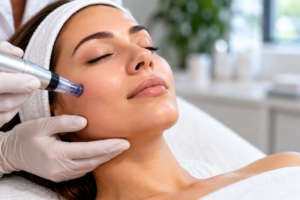
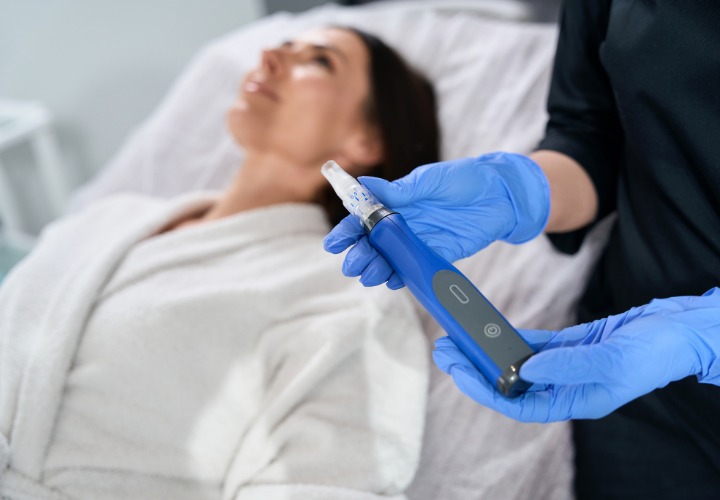
Microneedling creates controlled micro-injuries that stimulate the skin’s natural repair response, encouraging collagen and elastin production.
PRF, or platelet-rich fibrin, uses components derived from your own blood to support tissue repair and collagen production. Combined with microneedling, it can be incorporated into a regenerative approach to improving skin texture, fine lines, elasticity, and overall skin quality.
We also incorporate DMSO skincare and other individualized topical strategies when appropriate. Check out our blog here for a deeper dive.
The common thread is simple: rather than focusing exclusively on stopping movement or filling space, we want to support the actual health and regenerative capacity of the skin.
Facial aging is not typically just one problem. A wrinkle can reflect repetitive muscle movement, declining collagen, changes in skin thickness, hormonal shifts, sun exposure, hydration, inflammation, and the natural aging process.
So why treat every wrinkle as though it has exactly the same cause? At MyHealth1st, we believe aesthetics should be personalized, thoughtful, and rooted in the health of the tissue we’re trying to improve.
The goal isn’t to make everyone look frozen, filtered, or 18 years old. The goal is to help you look healthy, refreshed, vibrant, and like yourself. Because we believe aging beautifully should involve more than simply stopping your face from moving.
If you’re curious about Botox but want to understand your other options first, we’d love to help you explore them.
Contact MyHealth1st today to schedule an aesthetics consultation.
We’ll look at your skin, your goals, your overall health, and the options available to you, then create an individualized plan designed around the bigger picture.
Sometimes the best way to look younger isn’t to stop the clock. It’s to give your skin better tools for keeping up with it.

Erin is a National Board Certified and Functional Medicine Certified Health Coach with a passion for fitness, holistic wellness, and ethical food production.