
If you are comparing Weber Medical brain light devices for home use, the most practical choice is usually between the Original Infrared Helmet and the newer WeberBrain HOME. Both are designed to deliver light to the head in a convenient helmet format. The meaningful differences are how that light is produced and delivered, how the device fits, how settings are controlled, and how much you want to invest.
The short answer: the Original Infrared Helmet offers a simpler, lower-cost LED-based entry point. WeberBrain HOME adds a newer laser-based design, three wavelengths, adjustable scalp contact, and a more configurable system.

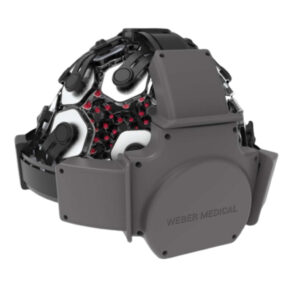
Feature | Original Infrared Helmet | WeberBrain HOME |
|---|---|---|
Current price | $3,200 | $4,950 |
Light Source | 320 LEDs | 228 precision laser diodes |
Wavelengths | 810 nm | 680, 808, and 1,064 nm |
Fit | Fixed helmet form with fit adjustment | Adjustable modules designed for closer scalp contact |
Light Delivery | Broad LED coverage | Focused light guided through precision optics |
Controls | Dedicated control panel | SmartLink controller; dedicated app |
Best Fit For | A straightforward, lower-cost home system | Buyers who value the newer platform and added configurability |
Both devices use transcranial photobiomodulation, often shortened to tPBM. This field studies how red and near-infrared light interact with biological tissue when applied to the head. Researchers have investigated possible effects on cellular metabolism, cerebral circulation, neural activity, sleep, and cognition, but devices and study protocols vary considerably.
That distinction matters. Research on tPBM as a field does not prove that a particular consumer helmet will produce a particular result for a particular person. Weber identifies both home-use helmets as wellness tools, not replacements for medical evaluation or treatment.
The Original Weber Infrared Helmet uses 320 LEDs at 810 nm. Its fixed helmet form provides broad coverage, and its controller allows users to adjust intensity, time, and frequency. It is the more established and lower-priced of the two home options.
The Original Helmet may make sense when your priorities are simplicity, a lower initial investment, and an LED-based system with straightforward controls. It can also be a reasonable choice for someone who wants to explore a consistent brain-light wellness routine without paying for the newer WeberBrain platform.
WeberBrain HOME uses 228 precision laser diodes distributed across 38 adjustable HEX modules. According to Weber Medical, the current device uses 680 nm, 808 nm, and 1,064 nm wavelengths. The modules incorporate protruding optical tips, described by the manufacturer as Light Fingers, that are designed to sit closer to the scalp and reduce the distance between the light source and the application area.
The helmet also uses a lens system to guide and focus the emitted light. Adjustable sliders help accommodate different head shapes, while a contact sensor is designed to prevent operation unless the helmet is positioned correctly. Settings can be managed through the SmartLink controller and their dedicated app.
WeberBrain HOME may be the better fit when you value the newer device architecture, multiple wavelengths, adjustable scalp contact, and greater flexibility in how sessions are configured.
Not automatically. Lasers and LEDs differ in beam properties, bandwidth, divergence, cost, and how easily they can be arranged across a larger area. WeberBrain uses focused laser diodes and precision optics; the Original Helmet uses a larger number of LEDs for broad coverage.
A peer-reviewed review comparing lasers and LEDs concluded that photobiomodulation is not inherently dependent on laser coherence. LEDs can also produce biological effects, and direct comparisons remain difficult because wavelength, power density, dose, distance, treatment area, and session design all matter. In other words, the engineering differences are real, but the word laser by itself does not prove a superior outcome.
A more useful question is whether the complete system fits your intended use: the wavelengths, light delivery, fit, controls, safety features, routine, and price.
At current prices, WeberBrain HOME costs $1,750 more than the Original Infrared Helmet. That difference primarily buys device design and flexibility rather than a promised result:
Whether those features justify the added cost depends on your priorities. Someone seeking a straightforward home routine may be satisfied with the Original Helmet. Someone who expects to use the device consistently and values the current-generation platform may prefer WeberBrain HOME.
WeberBrain PRO is a different purchase category. It is currently priced at $14,950 and uses 684 laser diodes with additional regional configuration options. It is intended for professional or advanced-use buyers who need capabilities beyond a typical home wellness routine. For most consumers comparing home devices, the more relevant decision is Original Infrared Helmet versus WeberBrain HOME.
Research into transcranial photobiomodulation is active and promising, but still developing. A systematic review of human studies found encouraging cognitive findings across a varied body of research, while also noting that only about half of the reviewed clinical trials were randomized controlled trials and that further investigation is warranted. Another comprehensive review documented substantial variation in device types and treatment parameters.
The practical takeaway is measured optimism. tPBM is scientifically interesting, and red and near-infrared light have plausible biological mechanisms. At the same time, published results from one protocol or research device should not be treated as proof that a consumer Weber helmet will prevent, reverse, or treat a neurological or psychological condition.
Weber identifies WeberBrain HOME as a wellness product intended to support general well-being. It is not designed to diagnose, cure, alleviate, or treat disease, symptoms, or other medical problems. The current user guide advises medical consultation before use for people under 16, during pregnancy, and in the presence of pre-existing conditions. It also identifies specific contraindications and precautions related to cerebral aneurysm, tumors in the application area, photosensitivity, and medications or products that may increase light sensitivity.
Read the current manual before use and follow the manufacturer’s instructions. Product-selection guidance is not a substitute for individualized medical advice.
The Original Infrared Helmet remains the more accessible Weber option for someone who wants a simple LED-based home system. WeberBrain HOME is the stronger fit for a buyer who values the newer laser-based architecture, three wavelengths, adjustable scalp contact, and expanded configuration options.
The decision should rest on fit, features, intended routine, budget, and comfort with an emerging field – not on promises of a guaranteed result.
Ready to explore WeberBrain HOME? View the WeberBrain HOME product page or contact MyHealth1st for product-selection questions.
Considering the lower-cost option? View the Original Weber Infrared Helmet.
No. Weber identifies WeberBrain HOME as a consumer wellness product. It is not intended to diagnose, treat, cure, or prevent disease.
The devices use different light sources and optical designs, so diode count alone is not a meaningful measure of performance. The Original Helmet uses 320 LEDs. HOME uses 228 focused laser diodes arranged in adjustable modules with precision optics.
Hair, device fit, and distance from the scalp can affect light delivery. Weber designed the HOME model’s adjustable modules and optical tips to sit closer to the scalp. Individual fit will still vary.
Follow the current manufacturer manual and any guidance from a qualified professional familiar with your health history. Weber’s current materials describe sessions of approximately 20 to 30 minutes, but settings and suitability can vary.
Probably not. PRO is a substantially more expensive professional or advanced-use system. Most individual buyers will make a more practical comparison between HOME and the Original Infrared Helmet.